Skill Level
Yoga Styles
Arrival-Departure
- Check-in Time: 12:00 PM (1st of the month)
- Check-out Time: 12:00 PM (27th of the month)
Certification - Yoga Alliance
Upon successful completion of the 300-Hour Advanced Yoga Teacher Training at Sambodhi Yoga Home, graduates become eligible to register as 500-Hour Yoga Teachers (RYT 500) with Yoga Alliance. This certification recognizes that they have met the rigorous standards set by Yoga Alliance for advanced yoga instruction and are qualified to teach yoga globally as Registered Yoga Teachers (RYT®).
Design
The training is designed to challenge and evolve individuals at all levels and is led by academically graduated teachers and researchers. This 300-hour course mainly focuses on Hatha yoga and Ashtanga, emphasizing breath synchronization with movements, alignment, and adjustments. Teachers are given the opportunity to conduct at least one full class so that they can build up their confidence in teaching Yoga.
This course is for those who want to experience the essence of Yoga science (from where Yoga originated) and transform their lives. As a result, you may experience greater liberation, bliss, and peace.
What Every Day Looks Like
Yoga teacher training syllabus The 300-hour yoga teacher training course (YTTC) includes the following comprehensive details:
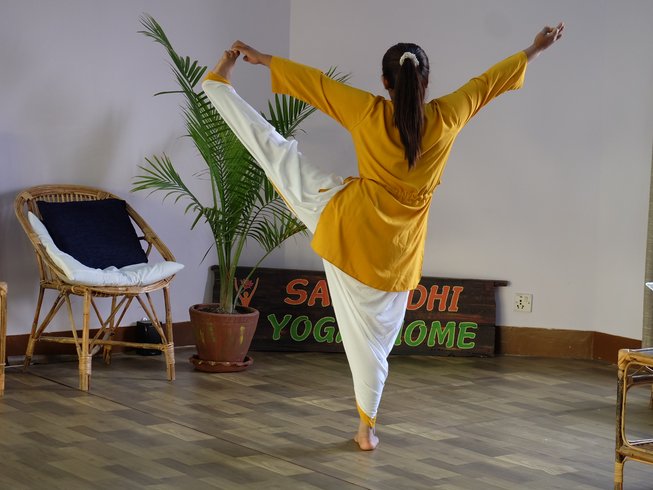
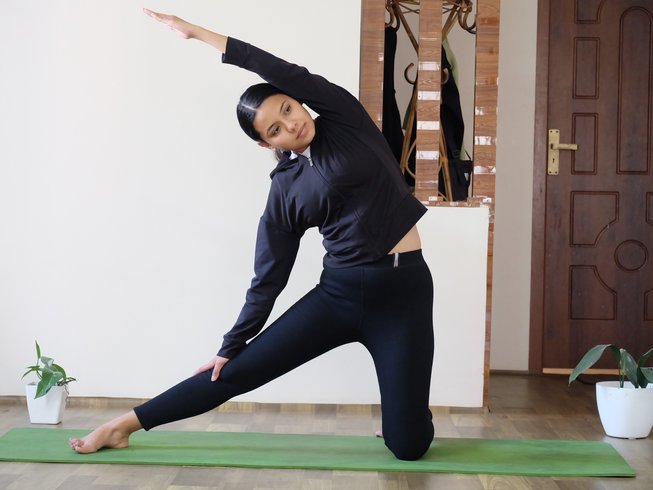
Yogasana (Yoga Poses)
- This training includes 100+ yoga postures
- You will learn the breathing, mindful meditation
- Benefits, and contra-indications of each yoga poses and Pranayamas
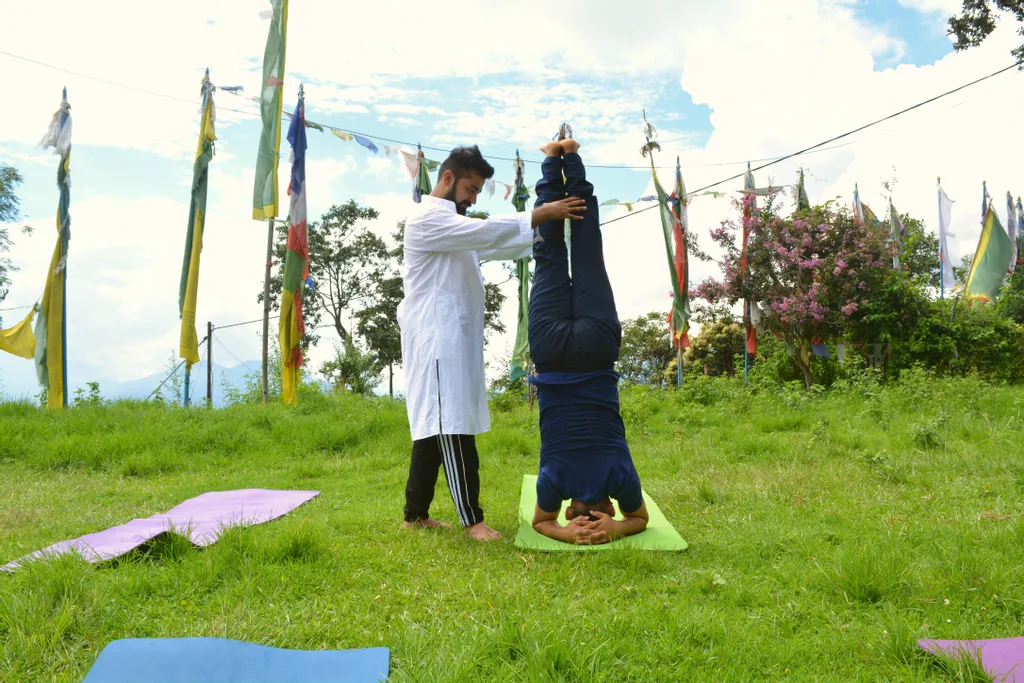
- You will learn from simple yet effective yoga poses to advanced yoga poses such as headstand, king pigeon pose, arm balancing pose, etc.
- Modification, variations, and advanced variations of the asanas
- Use of Yoga props and advanced yoga: Yoga block and strap, use of wall in yoga practice (eg. Headstand).
- The course will cover asana keys such as headstand, advanced backbends, inversions, splits, hip openers, and forward folds.
Practice Teaching (Practicum)
- You will start practicing teaching after about a week of practice. Practicing yoga for a few days in a receptive manner is important so that you understand that teaching others is a byproduct of your self-practice..
- Teaching will also be progressive, starting with one-to-one lessons in the beginning and moving step by step to bigger groups of students, ending up in full open classes.
What you will learn in practicum includes:
- Practice teaching
- Practice giving clear instructions for yoga practice
- Principles of demonstration
- Receiving feedback
- Observing others teaching
- Hearing and giving feedback
- Observing others teaching
- Pranayama (Control over prana)
- You will practice and get information about sectional breathing (abdominal, thoracic, clavicular, and full yogic breathing), including:
- Heating Pranayamas: Kapalabhati, Bhastrika, Ujjayi, and Surya Bheda pranayama
- Cooling pranayamas: Sheetali, Sheetakari, and Chandra Bheda pranayama
- Balancing Pranayamas: Bhramari, Nadisodhana pranayama
Mudra
In this course, you will practice various Mudras, including:
Hasta Mudra
- Jnana Mudra
- Chin Mudra
- Yoni Mudra
- Bhairava Mudra
Mana Mudra
- Shambhavi Mudra
- Nasikagra Drishti
- Kaki Mudra
- Shanmukhi Mudra
Bandha
- You will learn and practice the following Bandhas:
- Jalandhara Bandha
- Uddiyana Bandha
- Mula Bandha
- Maha Bandha/Tri-Bandha
Kumbhaka
- Antar Kumbhaka (Internal Breath Retention)
- Bahir Kumbhaka (External Breath Retention)
- Kevala Kumbhaka (Spontaneous Breath Retention)
Meditation
- In this course, you will learn various meditation techniques, both ancient and modern scientific research-based, including:
- Active meditation
- MSRT (Mind Sound Resonance Technique)
- Singing bowl meditation
- Anapana meditation
- Chakra meditation
- Om meditation
- Silent/mindfulness meditation
Shatkarma (Yogic Cleansing/Detox)
In this training, you will practice the following shatkarmas:
- Neti (nasal passage cleansing)
- Vaman Dhauti (gastro-esophageal tract cleansing)
- Tratak (concentrated gazing)
- Kapalabhati (frontal brain cleansing breath)
Yoga Philosophy
With the support of yoga philosophy and the highly spiritual masters at Sambodhi Yoga Home, you will delve deep into the search for real happiness, bliss, and celebration within. This philosophy will help you transform your life positively.
Topics covered include:
- Etymology of yoga and definitions of yoga in different classical yoga texts
- Brief introduction to the origin, history, and development of yoga
- Four streams of yoga
- Ashtanga yoga (eight-fold path of yoga) according to sage Patanjali
- Yoga Sutra (yoga aphorism)
- Bhagavat Gita on the life-changing aspect
- Five layers of human existence from Upanishads
Yoga Anatomy
You will learn about human anatomy to better understand safe and stable physical alignment in yoga poses. This in-depth knowledge will help you fine-tune and deepen your practice. Additionally, you will explore the biomechanics of yoga, major joint movements, the brain and nervous system, and the effects of yoga and meditation on the nervous system.
Included Excursions
Yoga Trek
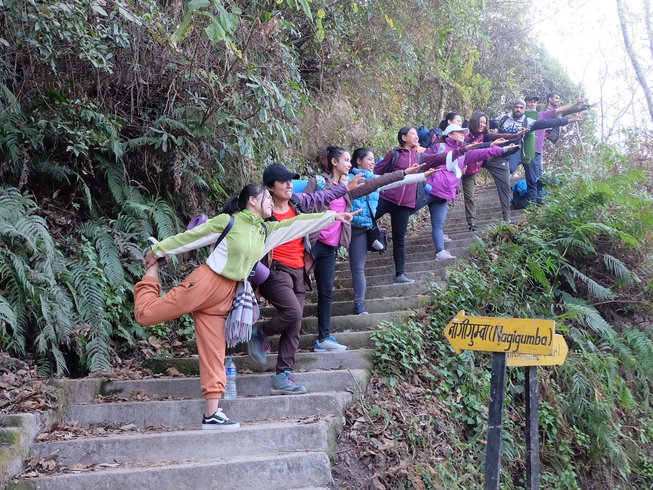
You will embark on a long hike from Sambodhi Yoga Home to Shivapuri Nagarjun National Park on Friday. During the hike, you will pass through a beautiful park with a wide variety of flora and fauna. You can witness of stunning panoramic views of the Kathmandu Valley. It may take 7-8 hours to complete the hike.